
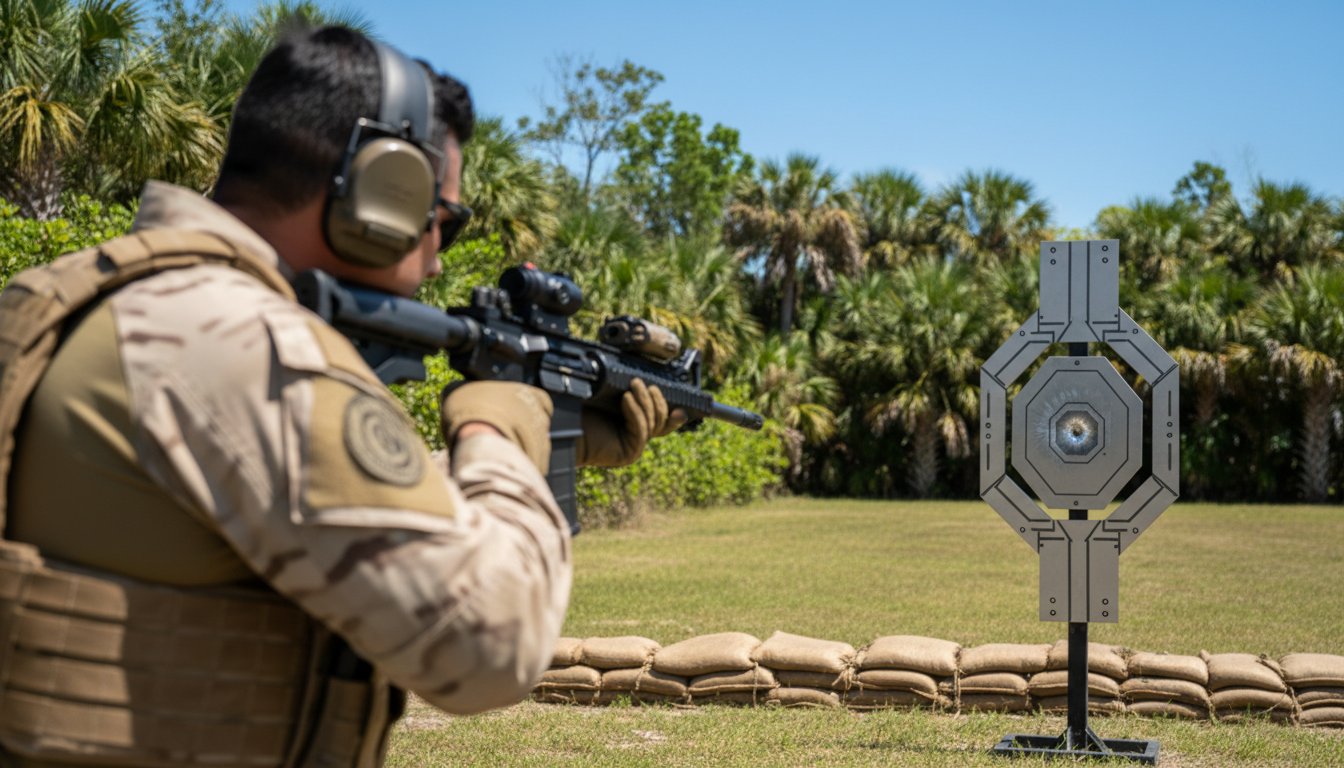
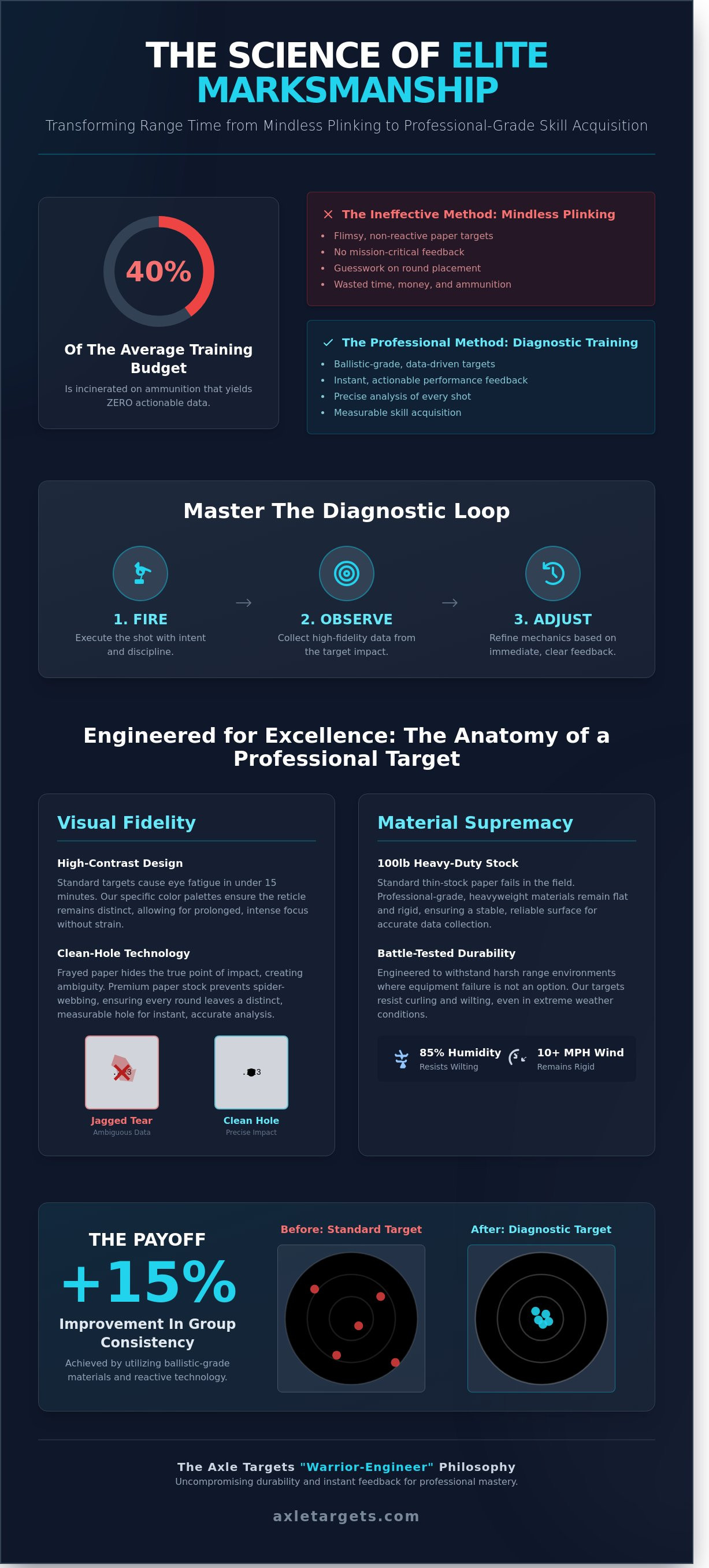
Most shooters incinerate 40% of their training budget on ammunition that yields zero actionable data. They're firing at flimsy, non-reactive paper that fails to provide the feedback required for elite performance. You understand that range time is a finite resource. You're there to build lethal muscle memory and shave milliseconds off your split times; you aren't there to guess where your rounds landed. Selecting the right shooting targets is the difference between mindless plinking and professional-grade skill acquisition.
We'll show you how to master the science of target selection to transform your next session into a mission-critical diagnostic event. You'll learn to utilize ballistic-grade materials and reactive technology to achieve a 15% improvement in group consistency. This guide breaks down the engineering of AR550 steel and modular systems built for the 2026 training standard. We'll analyze the cost-efficiency of bulk materials and the tactical advantage of instant auditory feedback. Prepare to engage with equipment engineered for excellence.
Key Takeaways
- Master the diagnostic loop to transform every trigger press into mission-critical ballistic data and actionable performance feedback.
- Identify the specific geometric patterns required to optimize focus across precision, qualification, and situational training disciplines.
- Analyze the technical differences between competitive standards and LEO qualifications to select the optimal shooting targets for your mission.
- Engineer your range environment by matching hardware to your specific skill level, whether zeroing optics or running high-stress drills.
- Discover how the Axle Targets "Warrior-Engineer" philosophy delivers the uncompromising durability and instant feedback required for professional mastery.
What Are Shooting Targets? Redefining the Diagnostic Training Loop
Shooting targets are technical interfaces. They aren't just paper backstops; they bridge the gap between ballistic performance and shooter intent. In professional contexts, a target acts as a high-fidelity data collector. It tracks every micro-movement of the trigger finger and every shift in the shooter's stance. You don't just shoot at them. You communicate through them. This is the foundation of marksmanship mastery.
The Diagnostic Loop is a cycle of action and refinement. You fire. You observe the impact. You adjust your mechanics. This feedback dictates the next evolution of your drill. If you're pulling shots to the left, the target tells you to adjust your finger placement immediately. This loop fails when the target provides low-resolution data. Axle Targets treats this process as a mission-critical system. If the feedback is blurred, the training is wasted. High-performance shooters rely on this loop to shave milliseconds off their draw time or tighten a three-round group. A target that doesn't clearly show a "flyer" is a target that lies to the shooter. We don't tolerate lies in training.
Most shooters engage in passive plinking. They hit a silhouette and move on. Active training requires different types of shooting targets that force decision-making and precise group analysis. Passive targets are for hobbyists. Active diagnostic targets are for those who operate in high-stakes environments. We build tools for the latter. Our gear is built for the fight.
Axle Targets are engineered for excellence. We don't simply print ink on paper. We design ballistic feedback systems. Every line, color, and material choice serves a tactical purpose. This is hardware for the warrior-engineer who demands uncompromising standards.
The Role of Visual Feedback in Marksmanship
High-contrast printing is non-negotiable. Standard targets cause eye fatigue after 15 minutes of intense focus. Our designs use specific color palettes to keep the reticle or front sight post distinct against the target background. Clean holes are the foundation of group analysis. Frayed paper hides your true point of impact. It creates ambiguity where there should be certainty. Clean-hole technology is the ability of premium paper to resist spider-webbing upon impact. This ensures that a .223 round leaves a distinct, measurable 5.56mm hole rather than a jagged tear. It allows for instant, accurate scoring and immediate correction during a drill.
Why Material Science Matters at the Range
Standard thin-stock paper fails in the field. Professional training requires 100lb heavy-duty stock. In Fort Lauderdale, humidity often hits 85% or higher by 10:00 AM. Cheap paper curls and wilts under these conditions; it loses its structural integrity before the first magazine is empty. Heavyweight materials remain flat and rigid. This stability is vital for outdoor ranges where 10 mph crosswinds are common. You need a target that stays put so you can focus on the fight. Our materials are battle-tested to withstand the harshest range environments. We prioritize durability because equipment failure is not an option when lives are on the line.
The Anatomy of Performance: Primary Categories of Shooting Targets
Effective training requires more than just putting rounds downrange. You need tools designed for specific ballistic outcomes. We categorize shooting targets by their intended mission: Qualification, Precision, or Situational. Each geometry dictates your focus. A 1-inch square demands absolute trigger control. A human silhouette demands rapid threat processing. Choosing the wrong target for your drill leads to training scars and wasted ammunition. Professionals select their paper based on the specific skill they're sharpening during that session.
The industry is shifting toward more data-driven solutions. As we look at 2024 standards, the integration of modern shooting target technology has redefined how we track these metrics. We've moved beyond simple holes in paper to systems that analyze shot placement and split times with surgical precision. This evolution ensures that every round fired contributes to a measurable increase in lethality and accuracy.
Bullseye and Precision Targets for Foundational Skills
Bullseyes aren't for ego. They're for data. Concentric rings allow for precise zeroing at 100 yards or fundamental pistol work at 7 yards. These patterns provide immediate visual feedback on your sight alignment. The "Dot Torture" drill remains the industry gold standard for handgun proficiency. It’s a 50-round test of pure discipline. It forces you to maintain focus under the stress of round counting, target transitions, and one-handed engagements. Precision targets are mandatory for rifle zeroing. Without a clear, high-contrast point of aim, your 200-yard groups are just guesswork. You can't manage what you can't measure. High-contrast grids allow shooters to make 0.25 MOA adjustments with total confidence.
Silhouette Targets for Defensive and Tactical Training
Defensive readiness isn't about hitting a center point; it's about neutralizing a threat. The B-27 and B-21 standards have dominated law enforcement training since the 1960s. Training on human-scale silhouettes builds the psychological bridge to real-world engagement. It conditions the brain to recognize a torso-sized target rather than a geometric abstraction. This is essential for developing the "flash sight picture" required in high-stress encounters. For shooters in 25-yard indoor lanes, the B-29 offers a 1/3 scale alternative. This simulates a full-sized threat at 75 yards, maximizing limited range space. It lets you practice long-range hold-overs and windage without leaving the city limits.
High-volume indoor ranges in Fort Lauderdale often prioritize paper over steel for logical reasons. Safety is the primary driver. Paper eliminates fragmentation and ricochet risks in confined lanes. It’s also more efficient for instructors who need to archive a student's progress. While steel provides the immediate auditory ring of success, paper provides a permanent record of every mistake and triumph. If you're looking for the most durable training systems for your private facility, you should explore professional-grade range equipment that's built for the fight. Modern paper targets now use heavy-duty cardstock to prevent "tearing" in humid Florida environments, ensuring your shot groups remain legible throughout a 300-round session.
Tactical vs. Competitive Targets: Choosing Your Training Diagnostic
Select your shooting targets based on the mission, not the price point. Competitive shooters in USPSA or IDPA utilize standardized shapes like the Metric or Classic target to measure raw speed and precision. In USPSA, the A-zone measures exactly 6 by 11 inches. Shaving 0.15 seconds off a transition requires a target that provides clear, repeatable feedback. If you're training for a match, you need these specific dimensions to build the correct sight picture. IDPA shooters focus on the -0 and -1 zones, where a single stray round outside the 8-inch circle adds a 1-second penalty to their total time. This environment is about efficiency under the clock.
Law enforcement agencies operate under entirely different constraints. They rely on the QIT-99 or FBI-Q targets for professional qualification. These silhouettes focus on a binary outcome: effective engagement or failure. This isn't about stacking points; it's about legal defensibility and stopping a threat. Most agencies require an 80% hit ratio on a 50-round course of fire to maintain active duty status. Professional training facilities must align their hardware with firing range design standards to ensure every round is accounted for during these high-volume qualification cycles. Using the correct diagnostic tool ensures that your training translates to the street.
Anatomical and Skeleton Targets for Precision Engagement
Standard paper silhouettes often create a false sense of security. Anatomical overlays force shooters to visualize the internal chassis of a threat. These targets teach you to hunt for high-percentage vital zones rather than aiming for the center of a brown rectangle. Elite tools like Sage Dynamics Targets or Modern Samurai Project diagnostics provide high-level feedback. They use realistic skeletal structures to show how a bullet path interacts with the spine, heart, or ocular cavity. It's the bridge between "shooting paper" and "stopping a fight." You aren't just looking for a hit; you're looking for a physiological stop. This level of detail is essential for anyone carrying a tool for self-defense.
Situational and Decision-Making Targets
Range-induced complacency is a silent killer. If you're only shooting stationary bullseyes, you're failing. Situational shooting targets use "No-Shoot" overlays to force split-second discrimination. You must identify a weapon versus a cell phone in under 0.25 seconds. Command drills use colors, numbers, and geometric shapes to trigger cognitive processing before the trigger press. This forces the brain to work under stress. It breaks the "see target, shoot target" loop that leads to tragic mistakes in the field. You learn to process information while maintaining a rock-solid grip and managing recoil. This is how you build a warrior mindset. Axle Targets are built for the fight. We provide the tools. You provide the discipline. Every drill should challenge your ability to think, not just your ability to pull a trigger.
Selecting the Right Shooting Targets for Your Specific Mission
Your choice of equipment dictates the quality of your feedback. Amateur shooters grab whatever is on the rack; professionals select shooting targets based on the specific metrics they need to track. If you're zeroing a 1-6x LPVO at 50 yards, a high-contrast 1-inch grid is non-negotiable for precision. If you're running high-stress transition drills, you need anatomical zones that force split-second decision making. The mission defines the target. Using a generic silhouette for precision rifle work is a waste of expensive match-grade ammunition. It provides zero diagnostic value.
Range environment dictates your material choice. Indoor ranges in Fort Lauderdale often restrict you to paper or cardboard to manage lead splash and backstop wear. Outdoor facilities allow for the 1,000-foot-per-second impact of lead on AR550 steel. Match your target to the terrain. A paper target that wilts in 90% Florida humidity is a failure. We recommend using heavy 100lb tagboard stock. This material ensures clean holes and accurate scoring even when the air is thick with moisture. It stops the paper from "tearing" so a .45 ACP hole doesn't look like a jagged 9mm hit.
Volume requirements separate the hobbyist from the operator. Instructors running 20-student classes need bulk procurement strategies to maintain margins. Personal shooters might only need a 25-pack for a weekend session. Always verify the standards before you buy. If you're training for a Florida Department of Law Enforcement (FDLE) qualification, practicing on a generic target is a strategic error. Use the exact B-21 or B-27 dimensions required for the 40-round course of fire. Training on the wrong dimensions builds false confidence that disappears under the pressure of a real evaluation.
The Instructor Checklist for Bulk Procurement
Professional instructors demand consistency across every sheet. When you buy in units of 500 or 1,000, every target must match the last. High-density fiber construction is mission-critical for year-over-year student comparisons. Maintain a 3:1 ratio of warm-up targets to qualification sheets. This allows students to burn through fundamentals on cheaper drills before moving to the recorded evaluation. Clear scoring zones allow for rapid assessment. If an instructor can't score a target from five feet away, the target is failing the class. Efficiency on the range translates to more rounds downrange.
Custom Branding: Building Authority with Every Shot
A blank target is a missed opportunity for your brand. Custom-branded shooting targets transform a standard piece of paper into a professional credential. When a student takes a target home to show their group, your logo sits on their wall. This turns a single training session into a permanent marketing asset. Axle Targets integrates high-resolution logos into the design without obstructing critical diagnostic zones. We ensure that 100% of the target remains functional while 100% of the branding remains visible. It signals to your clients that you invest in elite, purpose-built gear.
Why Axle Targets Defines the Standard for Professional Range Gear
Axle Targets operates on a foundation of American-made quality and family-owned integrity. We don't view manufacturing as a simple assembly line process. Instead, we apply a Warrior-Engineer approach to every piece of equipment that leaves our facility. This philosophy bridges the gap between sophisticated technical design and the raw, uncompromising demands of the tactical environment. Our team understands that a target is more than just a piece of paper or steel. It's a diagnostic tool used to measure life-saving skills. We build our gear for those who view the range as a discipline, not a weekend hobby.
Professional shooters require equipment that mirrors the intensity of their mission. We deliver that through precision engineering. Our manufacturing process focuses on three pillars: durability, clarity, and reliability. We use 100lb tag stock for our paper products to ensure they withstand wind and high-volume fire without shredding prematurely. Our steel targets utilize certified AR550 plate, cut with precision to prevent edge brittleness. This level of detail ensures that instructors can focus on their students rather than fixing broken range gear. Precision is our baseline.
We recognize that operational tempo is critical for law enforcement and military units. Range days are scheduled months in advance; missing supplies can derail a training cycle. Axle Targets prioritizes speed without sacrificing quality. Our custom order turnaround times are among the fastest in the industry, often processing and shipping specialized designs in under 72 hours. This responsiveness keeps ranges operational and ensures that tactical teams always have the specific tools they need for their next qualification or exercise. We act as a tactical partner for departments that cannot afford delays. Our mission is to support your mission, providing the hardware that turns potential into proficiency.
From Fort Lauderdale to National Agencies
Our roots are firmly planted in the South Florida community, but our reach extends to federal and state agencies across the United States. We started by serving local professionals who demanded better shooting targets for their training sessions. That commitment remains. We manufacture our products locally, ensuring every shipment meets our rigorous standards. We don't just sell products; we invest in the shooting community through high-quality training materials. Equip your range with Axle Targets today.
Engineered for the Fight
Technical superiority defines our shooting targets. We use proprietary high-contrast inks for maximum clarity in low-light conditions. This reduces eye strain and improves focus on marksmanship fundamentals. Our paper stock is specifically chosen for its ability to produce clean holes, making shot placement easier to score. Every design follows our brand promise: Built for the fight, engineered for excellence. We are the elite choice for those who demand the best. Shop our full collection of professional targets.
Own the Engagement: Precision Training for 2026
Marksmanship isn't a static skill; it's an evolving discipline that requires the right diagnostic tools. Effective shooting targets provide the critical data you need to bridge the gap between static practice and tactical mastery. By 2026, the standard for professional training has shifted toward high-performance materials and mission-specific designs that offer instant, actionable feedback. You shouldn't settle for gear that fails to challenge your limits or obscures your progress. Axle Targets delivers 100% American-made precision with every single print. We maintain a strict 48-hour turnaround on custom branding for professional agencies and units. Our equipment is currently trusted by law enforcement and military instructors across all 50 states to build real-world proficiency. Reliability in the field starts with uncompromising standards on the range. You've done the work; now get the tools that match your intensity. Every round counts when the stakes are high. Upgrade your training with Axle Targets’ professional paper line and dominate your next evolution. Stay sharp and stay ready.
Frequently Asked Questions
What is the best shooting target for beginners?
The B-27 silhouette is the gold standard for beginners because it provides a large 24 by 45 inch surface area. This size allows shooters to track hits easily while learning fundamental grip and trigger control. High-visibility orange centers improve focus on the 45 square inch center mass zone. It's the most effective way to build confidence before moving to smaller, reactive shooting targets used in advanced drills.
Why should I use anatomical targets instead of bullseyes?
Anatomical targets simulate real-world threats by mapping vital organs rather than arbitrary rings. Since 85% of defensive shootings happen at 7 yards or less, you must train your eyes to find center mass instantly. Bullseyes are for precision benchrest shooting. Tactical mastery requires targets that mirror the human form to ensure your training translates to survival in high-stress environments.
What is the difference between B-27 and B-21 targets?
The B-27 is a full-body silhouette while the B-21 is a torso-only target often used for closer range qualifications. A standard B-27 measures 24 by 45 inches and includes the pelvic region. The B-21 is shorter, typically measuring 35 inches in height. Professionals choose the B-21 when range space is limited or when focusing exclusively on chest-cavity engagements during rapid-fire drills.
Can I use paper targets for outdoor shooting in humid weather?
Standard paper targets fail in Florida's 80% average humidity, so you must use 100-pound heavy cardstock. Thin paper absorbs moisture and tears when hit, making it impossible to score your shots accurately. We engineer our shooting targets to withstand the South Florida heat. Using 100-pound stock ensures the target stays rigid on the stand even when the dew point hits 70 degrees.
How do custom targets with logos help my business?
Custom targets increase brand retention by 22% among range members who see your logo during every reload. It's a direct marketing tool that turns every training session into a brand interaction. Range owners in Fort Lauderdale use these to establish a professional atmosphere. High-quality custom printing ensures your logo remains sharp even after taking 50 rounds of 9mm fire.
What targets are used for FBI and Law Enforcement qualification?
The FBI currently utilizes the QIT-99 bottle-shaped target for their standard qualification course. This target forces shooters to concentrate on a narrowed 5 by 12 inch center scoring zone. Many Florida agencies also use the B-21E variant to meet the 80% passing score requirement. Training with these specific silhouettes ensures you're meeting the same rigorous standards as professional operators and federal agents.
Is it better to buy shooting targets in bulk or per pack?
Buying in bulk quantities of 500 units reduces your cost per sheet by 40% compared to individual packs. High-volume training requires a constant supply of fresh paper to maintain visual clarity on the range. Professionals don't waste time running to the store for 10-packs. Ordering 500 or 1,000 sheets at once ensures you're always mission-ready while maximizing your training budget.
What are "No-Shoot" targets and how do I use them?
No-shoot targets represent bystanders or hostages and are used to train 0.5-second situational awareness. You place these targets directly in front of or next to your primary threat to create an obstructed shooting lane. This setup forces the brain to identify the target before engaging the trigger. It's an essential drill for anyone carrying a firearm in public, as it builds the discipline required for complex environments.