
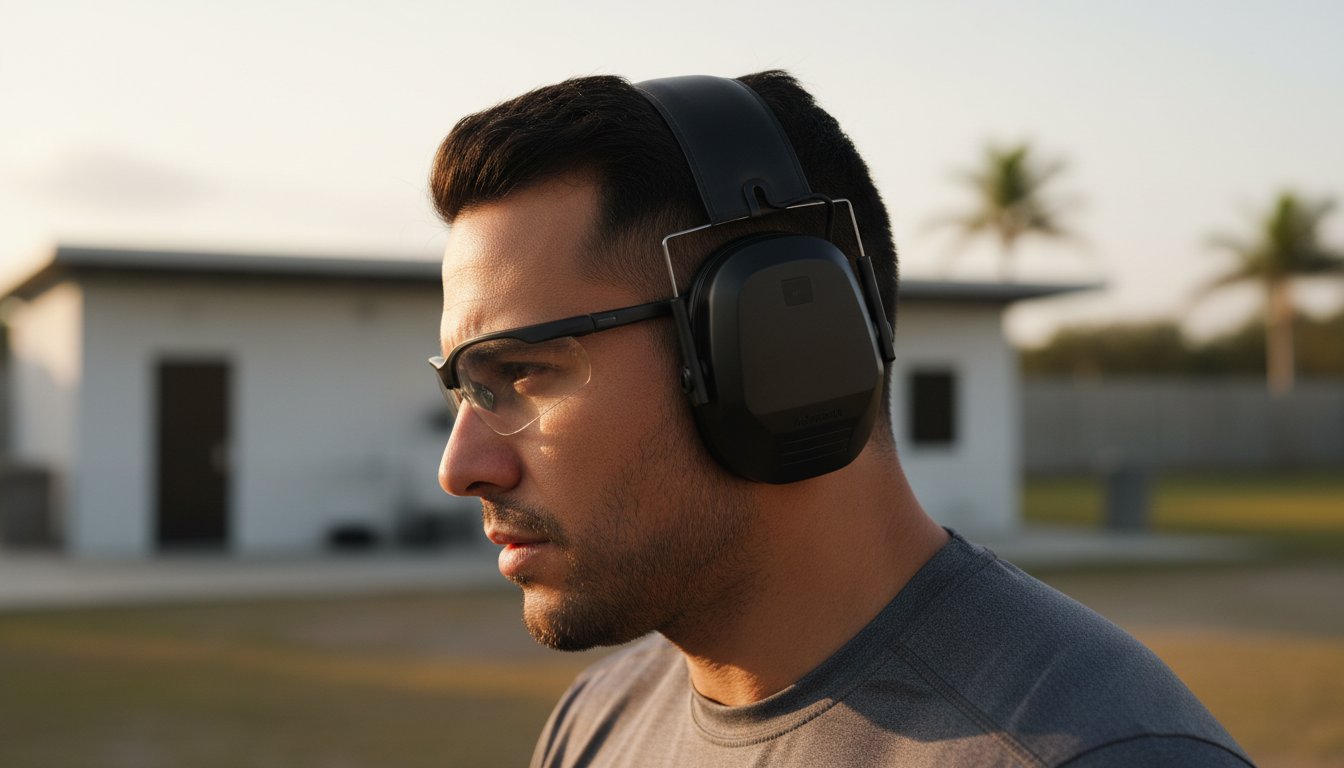
A single 165-decibel blast from a .308 muzzle brake causes permanent sensorineural damage in less than 2 milliseconds. Your hearing isn't a luxury; it's a tactical asset. If you can't hear a range command or the subtle reset of a steel target, you're operating at a deficit. We understand the grit required for 4-hour training sessions and the sheer annoyance of gear that fails to deliver comfort or clarity. Selecting the correct ear protection for shooting represents a mission-critical investment in your long-term lethality and range safety.
You need equipment engineered for the high-stakes environment of the modern range. This 2026 tactical guide breaks down the performance metrics that actually matter, from rapid-response compression circuits to high-decibel attenuation ratings. We'll master the NRR 30+ specifications and ergonomic requirements that eliminate the distraction of physical pain during extended drills. You're about to gain the technical intelligence needed to maintain total situational awareness while ensuring your hearing remains battle-ready for the next twenty years.
Key Takeaways
- Treat your hearing as a mission-critical asset by deploying a ballistic barrier against cumulative auditory damage.
- Decode the technical science of NRR to ensure your gear provides actual suppression rather than just theoretical protection.
- Compare passive blocks against active electronic compression to select the optimal tactical audio interface for your training environment.
- Implement the "Double Up" strategy to maintain uncompromising safety when engaging targets in high-decibel, confined range spaces.
- Leverage premium ear protection for shooting to sharpen your marksmanship through superior auditory feedback and shot rhythm analysis.
Preserving the Asset: Why Hearing Protection is Mission-Critical
Your hearing is a non-renewable resource. In the high-stakes environment of a live-fire range, high-quality ear protection for shooting serves as a ballistic barrier for your inner ear. It's a critical component of your loadout, not an optional accessory. Auditory damage in the shooting sports is cumulative and irreversible. Every decibel over the safety threshold causes microscopic trauma to the hair cells in the cochlea. Over time, this degradation erodes your ability to process sound and maintain situational awareness. The Warrior-Engineer approach treats gear selection as a technical problem requiring a high-performance solution. You demand precision from your rifle and reliability from your optic. Apply that same uncompromising standard to your auditory health.
The Anatomy of a Gunshot: Decibels and Damage
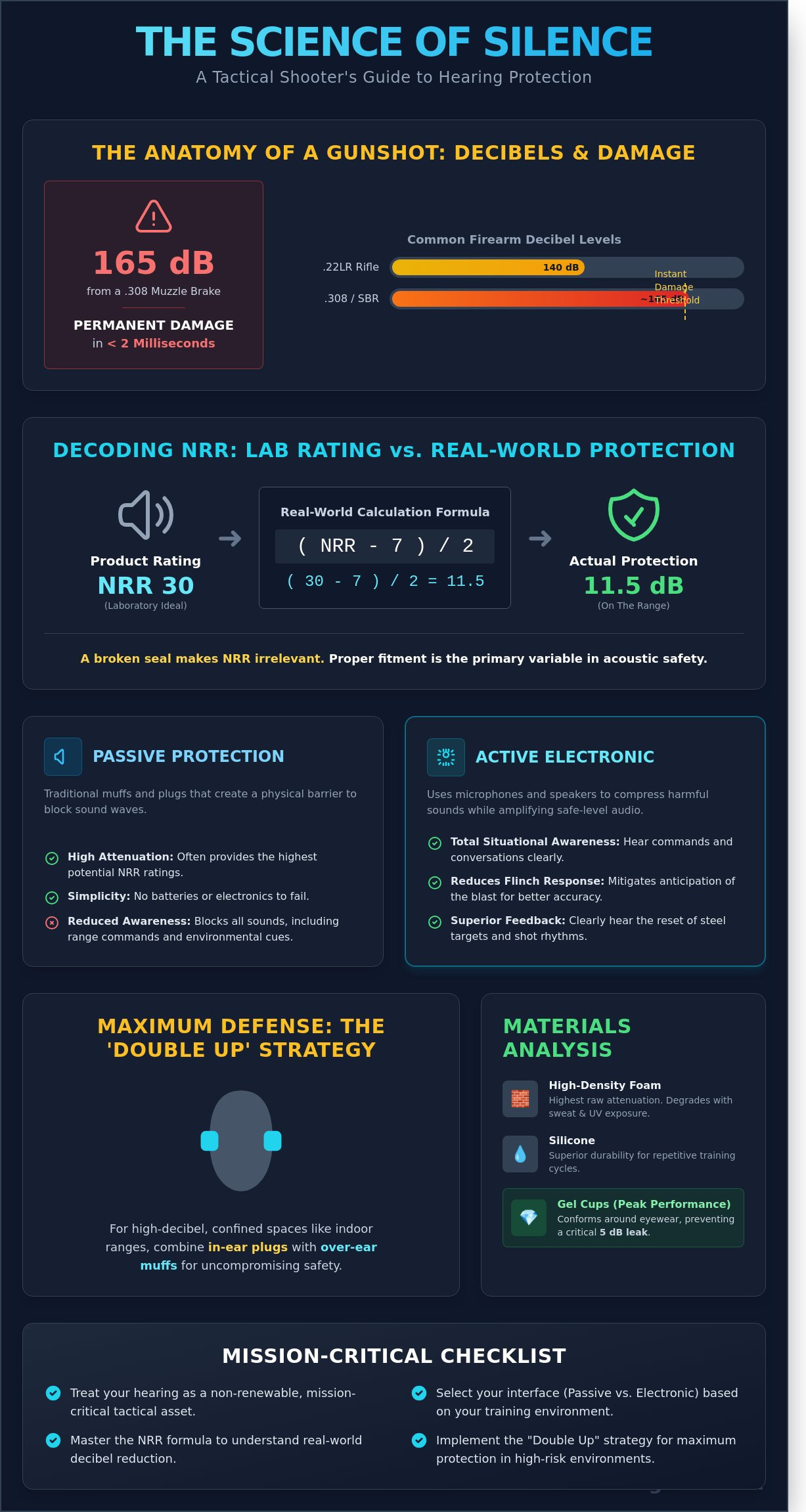
Gunshots are violent acoustic events. A standard .22LR rifle generates approximately 140 dB, which is the exact threshold where the National Institute for Occupational Safety and Health (NIOSH) warns that permanent hearing loss occurs instantly. Moving up to a .308 Winchester increases that pressure to roughly 167 dB. Because the decibel scale is logarithmic, a 3 dB increase represents a doubling of sound energy. Indoor ranges exacerbate this threat. Concrete lanes reflect kinetic energy back at the shooter, creating a concussive environment that pummels the eardrum. Without effective ear protection for shooting, you're exposing your sensory hardware to catastrophic failure.
Performance Benefits of Superior Sound Suppression
Superior noise reduction does more than save your hearing; it tightens your groups. Excessive noise triggers a primitive "flinch response" in the central nervous system. Your brain anticipates the blast, causing involuntary muscle contractions that pull your shots off-target. High-fidelity electronic protection mitigates this response by compressing harmful impulses while amplifying low-level sounds. Professional instructors at elite facilities like the Sig Sauer Academy prioritize these systems because they preserve situational awareness. You need to hear range commands and partner communication clearly during dynamic tactical training. Technical gear allows you to stay focused on the fundamentals of marksmanship without the cognitive load of acoustic trauma. Efficiency on the range requires total control of your environment.
Decoding NRR: The Technical Science of Sound Suppression
Hearing loss is permanent. In tactical environments, ear protection for shooting is mission-critical gear, not an optional accessory. The Noise Reduction Rating (NRR) serves as the ANSI S3.19-1974 benchmark for laboratory-tested attenuation. OSHA mandates these ratings to ensure equipment meets baseline safety thresholds. However, a rating on a box represents a laboratory ideal. It doesn't account for the chaos of a live range. Professional shooters must understand that NRR is a standardized metric, but it requires proper application to be effective.
Gear fails when the seal breaks. If your muffs don't seat perfectly against your skull, the NRR becomes irrelevant. Even a small gap allows sound pressure to bypass the suppression layers. This is why fitment is the primary variable in acoustic safety. You demand precision from your rifle; you must demand the same from your safety equipment. Absolute protection requires an uncompromising seal that maintains its integrity during rapid movement and recoil.
Calculating Real-World Noise Reduction
Do not simply subtract the NRR from the ambient decibel level. That is a dangerous mistake. The math is more rigorous. Use the standard formula: (NRR - 7) / 2. If your muffs carry a 30 NRR, you are only achieving an 11.5 decibel reduction in the field. This discrepancy is why high NRR gear is mandatory when firing short-barrel rifles (SBRs). An unsuppressed 10.5-inch barrel can generate 165 decibels. Without elite ballistic-grade ear protection, you risk immediate, irreversible acoustic trauma. High-performance training requires gear that accounts for these mathematical realities.
Materials Matter: Foam, Gel, and Silicone
Material choice dictates performance and longevity. High-density foam provides the highest raw attenuation but degrades quickly under sweat and UV exposure. Silicone offers better durability for repetitive training cycles. Gel ear cups represent the peak of engineering for professional shooters. They conform around eye protection frames, maintaining a 100% seal that foam cannot match. Consider these technical factors:
- Gel Cups: Essential for shooters wearing glasses; prevents a 5-decibel leak.
- High-Density Foam: Offers maximum initial suppression but requires replacement every 90 days.
- Silicone Plugs: Provide a custom-molded fit for secondary "double-plugging" in indoor environments.
A 2mm gap caused by glasses can reduce your effective protection by 50%. Professional-grade gel seals eliminate this vulnerability. Choose materials that support your mission. Mastery of the range starts with protecting your most vital sensors.
Passive vs. Electronic: Selecting Your Tactical Audio Interface
Choosing the right ear protection for shooting requires a choice between raw physical density and advanced signal processing. Passive protection utilizes high-density foam and sealed acoustic chambers to block sound waves. It requires zero power and has zero electronic failure points. Electronic protection uses internal microphones and speakers to manage your auditory environment. You trade simplicity for enhanced situational awareness. This decision impacts your ability to hear range commands and identify steel impacts in high-decibel environments.
- Passive: Best for high-volume indoor fire and budget-conscious training.
- Electronic: Essential for tactical drills, instruction, and maintaining 360-degree awareness.
- Reliability: Passive gear works 100% of the time. Electronic gear depends on circuit durability and battery life.
The Electronic Advantage: Sound Compression vs. Clipping
Modern electronic ear protection for shooting utilizes digital compression. This technology limits sounds above 82 decibels while amplifying low-level audio like whispers or distant range commands. Older, cheaper "clipping" technology simply shuts off the speaker when a shot is fired, leaving you momentarily deaf. High-end digital processors feature a reaction time of less than 2 milliseconds. This speed ensures you hear the "thud" of a hit on an Axle Targets system immediately after the muzzle blast. Directional microphones are standard in premium units, allowing you to track the exact origin of a sound within a 5-degree margin of error.
Passive Protection: The Reliability of Low-Tech
Passive muffs are the fail-safe of the tactical world. They offer a consistent Noise Reduction Rating (NRR) of 30dB or higher without relying on a circuit board. You don't worry about battery corrosion or rain-shorted electronics during a 48-hour field exercise. For shooters operating indoors where sound bounces off concrete walls, the raw mass of a passive cup often provides superior attenuation. They are cost-effective tools for high-volume range operations where sophisticated audio processing isn't a mission requirement.
Profile and Form Factor: Muffs vs. In-Ear
Form factor dictates your shooting mechanics. Traditional over-the-ear muffs often feature a 1.5-inch profile that can interfere with a proper cheek weld on a carbine stock. This physical obstruction can degrade accuracy by 10% during rapid-fire transitions. Electronic earbuds weigh less than 0.5 ounces and sit entirely within the ear canal. They are the elite choice for 95-degree training days and high-mobility drills where heat dissipation and weight are critical. While muffs provide better overall coverage, in-ear options offer the uncompromising freedom of movement required for professional-grade ear protection for shooting.
Range Environments: Tailoring Your Loadout for Indoor and Outdoor Training
Sound is a ballistic force. In an open field, sound waves dissipate into the atmosphere. Inside a concrete box, those same waves ricochet off every surface. Overhead baffles and side walls redirect energy back toward your skull, intensifying the auditory impact. You must adapt your loadout to the specific environment to maintain peak performance and safety.
Indoor Range Tactics: Maximizing Suppression
Indoor environments are unforgiving. A single .308 muzzle blast can exceed 160 decibels in a confined lane. Standard muffs often fail to provide adequate coverage in these high-pressure zones. We recommend a minimum NRR of 28 to 30 for all indoor work. The "Double Up" strategy is your baseline for survival in these spaces. Insert high-density foam plugs before donning your electronic muffs. This combined setup provides 32 to 36 decibels of actual suppression. It's the only way to manage the concussive force from a neighbor running a muzzle brake in the next lane while still hearing range commands through the electronic amplification. Using the right ear protection for shooting indoors prevents the cognitive fatigue caused by constant acoustic overpressure.
Outdoor and Competition Gear Loads
Outdoor training shifts the priority toward situational awareness. During a 3-Gun or USPSA match, you must hear the timer and the Range Officer with absolute clarity. Open air allows sound to escape, but your ear protection for shooting must still handle high-volume fire across an 8-hour training block. Prioritize electronic gear with an IPX7 or higher waterproofing rating. Sweat and sudden rain destroy cheap electronics that aren't built for the field. Comfort is a tactical requirement, not a luxury. Gel ear seals prevent the "clamping" headaches that ruin focus during long sessions. High-performance gear ensures you stay locked on the target until the last round is downrange.
Build your ultimate range kit with professional-grade reactive targets designed for high-intensity training and instant feedback.
Beyond the Gear: Mastering Your Training with Axle Targets
Superior marksmanship requires aggressive sensory management. Elite ear protection for shooting does more than prevent permanent hearing loss; it filters the chaos of the firing line. High-decibel suppression allows you to analyze the cadence of your fire with clinical precision. You stop reacting to the blast and start focusing on the fundamentals. This transition from noise mitigation to performance analysis separates the casual hobbyist from the professional operator.
This commitment to high-performance equipment isn't limited to the firing line; many enthusiasts apply the same exacting standards to their vehicles, sourcing specialized components from suppliers like MTX Performance to ensure reliability and peak operation.
High-performance training demands the elimination of distractions. When you invest in top-tier ear protection for shooting, you gain a tactical edge in auditory processing. Proper suppression reduces the 140 to 160 decibel blast of a 5.56 round to a manageable level, preventing the involuntary flinch response that ruins shot groups. This clarity allows a shooter to hear the mechanical reset of the trigger and the rhythmic cycle of the bolt. It transforms a loud range session into a data-driven training evolution where every sound serves as feedback.
The Auditory Component of the Shot Timer
Shaving 0.25 seconds off a draw stroke requires hearing the start signal instantly. Electronic hearing protection amplifies the high-frequency beep of a shot timer while clipping dangerous impulses. This is vital when working on a 1.5-second par time for a standard Bill Drill. Beyond the timer, you need to hear the distinct "ping" of AR550 steel. Axle Targets provide that immediate acoustic feedback. This confirms hits at 25 yards without breaking your sight picture. It builds the neural pathways required for defensive proficiency through instant validation.
Built for the Fight: Uncompromising Standards
Axle Targets engineers equipment for those who refuse to settle. We build our reactive systems to withstand thousands of rounds of ballistic impact. Professional shooters don't pair high-end optics with low-grade targets. They use gear that matches their mission. Our modular systems integrate with elite-tier safety equipment to create a high-fidelity training environment. Mastery requires the right tools and the grit to use them. Gear up, grab your Axle Targets, and engage.
Own the Sound. Master the Mission.
Hearing isn't just a sense; it's a mission-critical asset that doesn't regenerate once the 140-decibel threshold is breached. Selecting the right ear protection for shooting requires a calculated balance between NRR 26+ ratings and high-speed electronic compression. Whether you're clearing rooms in a 20-foot indoor lane or engaging targets at 800 yards, your audio interface must deliver total clarity without compromise. High-performance suppression ensures you stay focused on the fundamentals that save lives in the field.
Superior gear demands superior training. Axle Targets provides family-owned engineering that's battle-tested by military and law enforcement professionals in 50 states. Our American-made paper targets are built to provide 0.1-second instant feedback, ensuring every round fired serves a tactical purpose. We don't build for hobbyists; we build for those who demand 100% reliability in every drill. Elevate your standard and push your limits with equipment that's engineered for excellence.
Upgrade your training with premium American-made targets at axletargets.com
Stay focused. Stay lethal. The range is waiting.
Frequently Asked Questions
What is a good NRR for shooting?
Aim for a Noise Reduction Rating (NRR) of at least 28 dB for indoor ranges or 24 dB for outdoor environments. High-caliber rifles produce sound levels exceeding 160 dB, which can cause permanent damage in 0.01 seconds. Reliable ear protection for shooting must bridge the gap between peak impulse noise and safe exposure limits. Don't settle for anything under 22 dB if you value your long-term hearing health and tactical focus.
Can I use standard hardware store earplugs for shooting?
You can use hardware store plugs, but most only offer an NRR of 20 to 23 dB. These are designed for continuous machinery noise, not the 150 dB pressure waves of a .45 ACP or 5.56 round. Tactical-grade plugs utilize specialized materials to provide a more consistent seal. If you choose standard foam, ensure they are rated for at least 29 dB to meet the minimum safety requirements for high-volume fire.
Is it better to use earplugs or earmuffs for the range?
Earmuffs are superior for high-decibel protection because they cover the temporal bone, but earplugs offer a more consistent internal seal. For indoor ranges where sound bounces off concrete walls, you need both. A quality pair of muffs provides 25 dB of reduction, while foam plugs can add another 5 to 10 dB of effective protection. Your choice depends on the environment; always prioritize the highest total decibel reduction available.
Why do people wear earplugs under earmuffs?
Shooters wear plugs under muffs to achieve a double up effect that adds roughly 5 to 6 dB of protection to the highest-rated device. This is critical in confined spaces where sound pressure exceeds 165 dB. When you use this method, you ensure that even if a cheek weld breaks the seal of your earmuff, your inner ear remains protected. It's a standard operating procedure for professional instructors and high-volume tactical training.
Do electronic earmuffs actually protect your hearing?
Electronic earmuffs protect your hearing by using internal circuitry to compress or clip sounds over 82 dB in less than 2 milliseconds. They allow you to hear range commands at 20 dB while instantly neutralizing the 155 dB report of a firearm. This technology provides the situational awareness needed for dynamic drills without compromising safety. Ensure your electronic ear protection for shooting has a high NRR to maintain passive protection when the batteries fail.
How often should I replace my shooting ear protection?
Replace foam earplugs after every single session to maintain hygiene and seal integrity. For earmuffs, you must swap out the gel or foam ear cushions every 6 to 8 months if you train weekly. Sweat and UV exposure degrade the plastic seals, leading to a 3 to 5 dB drop in performance over time. Inspect your gear for cracks or stiffness every 30 days to ensure your equipment remains mission-ready.
Will earmuffs interfere with my rifle scope or cheek weld?
Standard bulky earmuffs will definitely interfere with your cheek weld, often pushing the cups away from your ear and breaking the seal. You need low-profile, tapered designs specifically engineered for long-gun shooters. These models feature a 30 percent thinner bottom half to clear the stock of an AR-15 or bolt-action rifle. Maintaining a consistent weld is vital for accuracy; don't let inferior gear compromise your shot placement or your hearing.
What is the highest NRR rating available for shooters?
The highest NRR rating currently available is 33 dB, typically found in premium disposable foam earplugs. For over-the-ear muffs, the ceiling is generally 30 to 31 dB due to the physical limitations of the cup size. When you combine a 33 dB plug with a 31 dB muff, you don't get 64 dB; you get an effective rating of approximately 36 to 38 dB. This is the maximum ballistic noise suppression achievable with current wearable technology.