
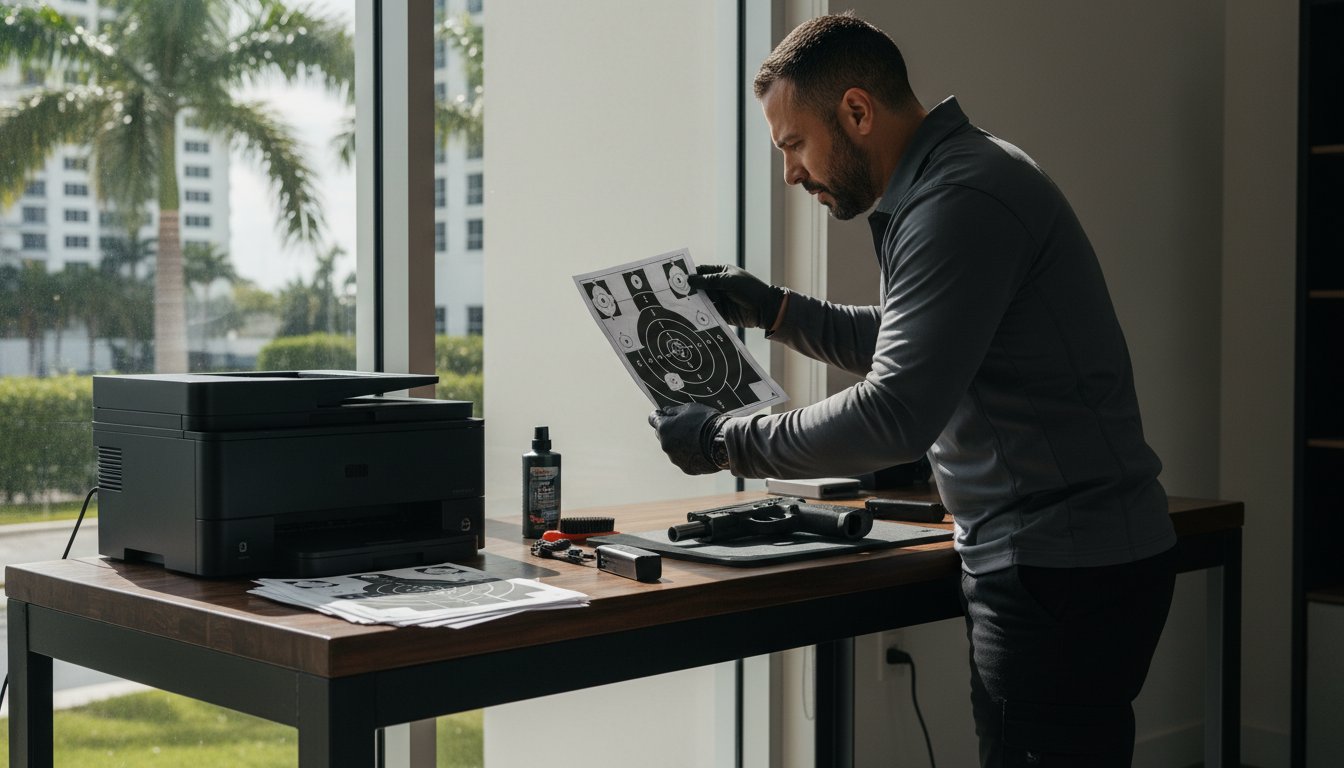
Amateurs train until they get it right; professionals train until they can't get it wrong. When a standard 50-pack of paper targets costs $1.25 per sheet at your local range, your wallet starts to dictate your lethality. You shouldn't have to compromise your training volume because of retail markups. We understand the grit required to maintain elite standards; we know that a lack of specialized templates like Dot Torture can stall your progress. Leveraging high-performance targets to print at home is the tactical solution to this logistical bottleneck.
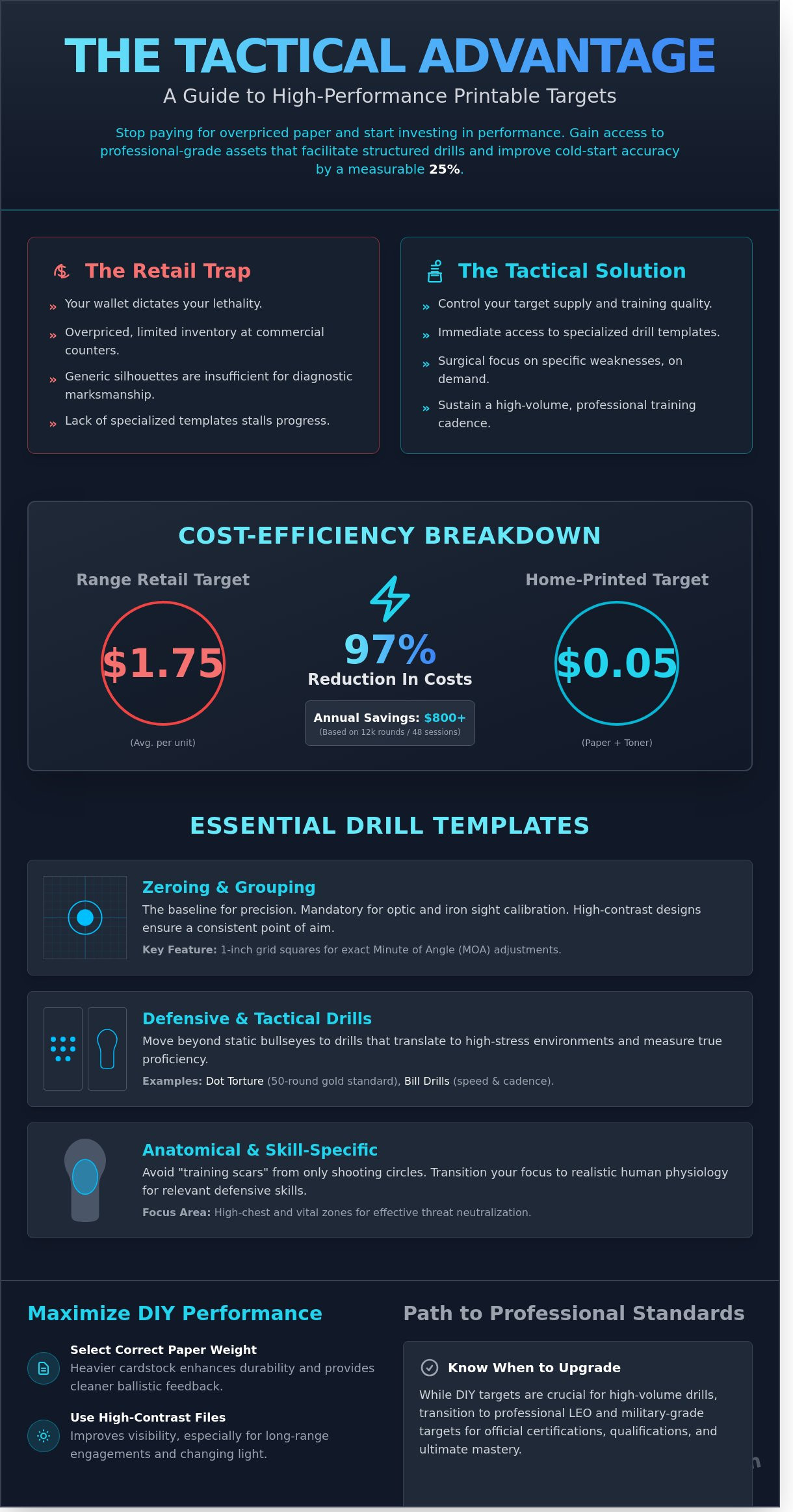
This guide empowers you to master DIY range templates to maximize your trigger time without losing technical precision. You'll gain access to professional-grade assets that facilitate structured drills and improve your cold-start accuracy by a measurable 25 percent. We're breaking down the exact methods to print, prep, and execute advanced training cycles. Stop paying for overpriced paper and start investing in your own performance. It's time to build for the fight.
Key Takeaways
- Leverage cost-effective DIY solutions to sustain a high-volume training regimen without sacrificing technical precision.
- Access battle-tested drill templates, including Dot Torture and Bill Drills, by utilizing high-quality targets to print for immediate deployment.
- Enhance ballistic feedback and long-range visibility by selecting the correct paper weight and high-contrast digital files.
- Identify the critical scale and durability limitations of home-printed paper to ensure your training remains relevant to real-world standards.
- Learn when to transition from DIY templates to professional LEO and military-grade targets for official certification and mastery.
The Strategic Value of Targets to Print for High-Volume Training
High-volume shooters understand that consistency is the only path to mastery. You cannot rely on the limited, overpriced inventory at a commercial counter to sustain a professional training cadence. Utilizing targets to print ensures your preparation begins before you reach the staging area. This strategy eliminates logistical bottlenecks. It allows for a seamless transition from the briefing room to the firing line. Professional marksmanship is built on the foundation of repetitive, high-stakes drills. When you control your target supply, you control the quality of your training evolution.
Cost-Efficiency for High-Round-Count Sessions
Retail markups on paper are a tax on the dedicated. A standard 8.5x11 sheet costs approximately $0.02. High-yield toner adds another $0.03 per page. This $0.05 investment replaces the $1.75 retail sheets found at many South Florida ranges. That is a 97% reduction in target costs. For an operator firing 12,000 rounds annually across 48 sessions, the savings exceed $800. This capital is better spent on high-quality ballistic hardware or match-grade ammunition. Bulk purchasing professional cardstock targets only makes sense when the price per unit falls below $0.20. For daily high-round-count drills, the home office is your primary supply depot.
- Home Printing: $0.05 per unit.
- Range Retail: $1.50 - $2.50 per unit.
- Annual Savings: Significant capital for gear upgrades.
Immediate Access to Specialized Drill Templates
Generic silhouettes are insufficient for diagnostic marksmanship. Elite performance requires specific geometry designed for trigger control and sight alignment. When you identify a flaw in your draw stroke, you need a corrective Shooting target immediately. Printing niche templates like the Bill Drill or the 2-2-4-2 challenge allows for surgical focus on specific weaknesses. You don't wait for a 3-day shipping window. You generate the solution on demand. This rapid iteration cycle is critical for shooters preparing for tactical qualifications or competitive matches. Using specialized targets to print ensures that every round fired serves a documented training objective. There is no wasted motion; there is only progress. Tactical readiness requires the ability to pivot your training focus based on yesterday's performance data. Instant access to a diverse library of templates makes that possible.
Essential Target Templates Every Shooter Should Have
Mastery on the range requires more than just sending lead downrange. It demands a structured approach using specific data-driven templates. High-performance shooters don't settle for generic paper. They utilize specialized targets to print that isolate variables like trigger press, recoil management, and sight recovery. Your training session is only as effective as the feedback your target provides. If you can't measure your performance, you can't improve it.
Zeroing and Grouping Templates
Precision is the baseline for every tactical application. Zeroing templates featuring 1-inch grid squares are mandatory for optic and iron sight calibration. These 1-inch increments allow for exact Minute of Angle (MOA) adjustments. A 0.25-inch deviation at 25 yards results in a 4-inch miss at 400 yards. High-contrast centers are vital for long-range work, ensuring your point of aim remains consistent even as light conditions change. These designs provide the technical clarity needed to confirm your rifle or pistol is a surgical instrument.
Defensive and Tactical Drill Targets
Defensive training requires moving beyond static bullseyes. The Dot Torture drill is the 50-round gold standard for measuring handgun proficiency. It forces the shooter to execute draws, reloads, and weak-hand engagements with zero margin for error. For those focusing on speed and cadence, the Bill Drill utilizes an 8.5x11 silhouette to track 6 rounds fired in under 2 seconds. Standardizing your training with these templates ensures your skills translate to high-stress environments. Many elite units rely on U.S. Army weapons qualification targets to maintain a baseline of lethality across 1.3 million personnel. Adding "No-Shoot" overlays to these drills builds the split-second situational awareness required for target identification.
Anatomical and Skill-Specific Graphics
Training scars occur when shooters only hunt for the center of a circle. Anatomical overlays transition your focus to realistic human physiology, emphasizing the high-chest and ocular cavity. This shift in perspective is critical for real-world application. Skill-specific graphics, such as diagnostic wheels, help identify common errors like anticipating recoil or "milking" the grip. Once you've mastered these paper fundamentals, you can push your limits further with rugged reactive steel systems that provide the instant auditory feedback necessary for rapid skill acquisition. Every shot must serve a purpose. Use the right template to ensure it does.
Technical Limitations of Home-Printed Targets
Home-printed solutions are a tactical stop-gap, not a professional standard. While using targets to print from a home office offers convenience, standard 8.5 x 11-inch paper possesses inherent ballistic flaws. It lacks the surface area and structural integrity required for high-intensity training. A single sheet of copy paper provides roughly 93.5 square inches of target space; this is less than 15% of the area provided by a standard B-27 silhouette. You aren't just losing space; you're losing the ability to track off-center hits and peripheral misses.
Managing Scale and Distance Constraints
Precision requires math. When your training area is limited to a letter-sized sheet, you must scale your distance to maintain the correct visual ratio. A 2-inch circle at 3 yards mimics the difficulty of a 10-inch center-mass zone at 15 yards. This 1:5 ratio is critical for realistic engagement. If you fail to adjust your range distance, you're training for a false sense of security. Calculating realistic A-Zone equivalents on standard paper requires a disciplined approach to sight alignment. Using targets to print for sighting in a precision optic demands that you place the target at exactly 25 or 50 yards to match the ballistic arc of your specific load.
The Feedback Gap: Paper vs. Professional Cardstock
Standard 20lb bond paper is a poor medium for ballistic feedback. High-velocity rounds, often exceeding 1,100 feet per second, cause thin paper to "starburst" or tear. This creates jagged, irregular holes that obscure the exact point of impact. Professional instructors and those adhering to New Jersey law enforcement firearms standards demand 100lb tagboard or heavy cardstock for a reason. These materials allow the projectile to "punch" a clean, measurable hole. This clarity is essential for scoring and diagnostic analysis.
- Auditory Feedback: Paper is silent. Unlike AR550 steel, thin paper provides zero acoustic confirmation of a hit.
- Environmental Failures: Fort Lauderdale humidity often exceeds 70%. Standard inkjet ink bleeds when damp, and 20lb paper wilts under its own weight in high-moisture environments.
- Structural Integrity: After five rounds of .45 ACP, a standard sheet of paper often loses its center. It lacks the fiber density to hold its shape under rapid-fire strings.
Professional training requires professional tools. If you must use home-printed options, upgrade your media to 65lb cardstock at a minimum. It's the difference between guessing your grouping and knowing your zero is locked in. Don't let your gear be the weak link in your progression.
How to Optimize Your Printed Targets for Maximum Performance
Precision training demands professional-grade preparation. You can't achieve elite results with flimsy paper and distorted graphics. When you select targets to print, the quality of your physical output determines the accuracy of your feedback loop. High-contrast PDF files are non-negotiable for visibility at 25 yards and beyond. Use 110lb cardstock to ensure clean bullet holes. This heavy material provides superior ballistic feedback by preventing the jagged tearing common with standard 20lb office paper. High-performance shooters don't settle for "good enough" equipment; they ensure every component of the range day is engineered for excellence.
Printer Settings and Material Selection
Technical drills require 1:1 scale accuracy. Avoid the 'Fit to Page' trap in your print menu. This setting often scales images down by 5% to 10%, shrinking a 1-inch zeroing square and ruining your MOA calculations. Always select 'Actual Size' or '100% Scale' to maintain the intended proportions of the drill. Regarding paper finish, choose matte over glossy. Glossy surfaces catch the intense Florida sun at 90-degree angles, creating a glare that washes out your point of aim. High-contrast black ink on white stock provides the sharpest visual break for your eyes. This clarity allows for faster target acquisition than muddy color prints that bleed into the background.
Field Prep and Backer Integration
Stability is critical in high-stakes environments. Wind speeds exceeding 15 mph will turn unsecured paper into a sail, shifting your point of impact and invalidating your data. Apply a layer of 3M Super 77 adhesive or heavy-duty staples to secure your template to a corrugated cardboard backer. This integration extends the life of your template and ensures the paper stays flat during rapid-fire strings. Shot Tracking is the process of marking hits to analyze grouping patterns. By using a fresh backer and clear overlays, you can isolate specific strings of fire to identify mechanical or shooter errors. If you want to move beyond paper and experience the ultimate training feedback, upgrade your kit with professional AR550 steel targets. Our gear is built for the fight and engineered to withstand the most demanding training cycles.
Transitioning from DIY Templates to Professional Standards
Basic targets to print at home serve a tactical purpose for initial zeroing or casual practice. They're cost-effective for a quick trip to any local range. However, home-office paper reaches its limit quickly. When your training moves from basic marksmanship to professional qualification, you need gear that matches the mission. Flimsy paper lacks the durability for high-volume drills or adverse weather conditions found in various training environments. It's time to trade convenience for combat-readiness.
Why LEO and Military Standards Require Professional Paper
Official certifications rely on standardized silhouettes like the B-21, B-27, and the FBI Q target. These aren't just shapes; they're engineered for psychological conditioning. Training on full-scale, life-sized anatomical targets prepares the mind for the reality of an engagement. Standard 20lb printer paper cannot replicate the 24x45 inch scale required for these qualifications. Professional-grade paper targets use heavy-duty stock designed to withstand 50 or more rounds without shredding. This ensures your shot groups remain legible during 8-hour training blocks.
- Anatomical Accuracy: Professional targets use precise scoring zones based on human physiology.
- Durability: High-GSM paper resists tearing and wind-induced damage.
- Standardization: Meet the exact requirements for HR 218 or state-mandated LEO qualifications.
Axle Targets: Built for the Fight
Axle Targets bridges the gap between engineering and the frontline. Our professional series is manufactured in the United States using uncompromising materials. We focus on tactical precision. Every line and zone provides immediate feedback for the shooter. We don't settle for "good enough." Our anatomical designs force you to engage with intent. For range owners and tactical instructors, we offer custom branding. Put your logo on your gear to project a professional, mission-ready image. Elevate your range today with Axle Targets' professional series.
Don't let your training plateau because of inferior equipment. While targets to print are a solid starting point, the transition to professional standards is mandatory for those who demand mastery. Axle Targets delivers the reliability required for the most advanced training environments in the world. Secure your gear. Master your craft. Stay ready.
Master Your Marksmanship Beyond the Paper Limit
High-volume reps build the muscle memory required for the fight. While targets to print on standard 8.5x11 inch paper provide a cost-effective entry point for daily dry fire, they hit a hard ceiling when transition speed and ballistic durability become the priority. Real mastery demands equipment that doesn't shred after a single magazine. You need gear that stands up to 1,000-round weekends and provides the instant auditory feedback required to shave tenths of a second off your split times. Axle Targets bridges the gap between home-printed templates and mission-ready hardware.
We deliver 100% American-made, family-owned solutions built to Official Law Enforcement and Military standards used in all 50 states. Whether you need custom instructor branding or battle-tested steel, we engineer tools for those who refuse to settle for mediocre results. Stop compromising on your preparation and invest in gear that works as hard as you do. Upgrade to Professional-Grade Targets Engineered for the Fight. Your next breakthrough is waiting on the range.
Frequently Asked Questions
Can I use standard 8.5 x 11 paper for shooting targets?
You can use standard 8.5 x 11 inch paper for most training drills. It’s the most accessible format for high-volume practice. Standard printer paper works well for sighting in optics at 25 yards. Ensure your printer settings are set to 100% scale. This prevents distortion of the 1 inch grid lines required for precise MOA adjustments. Most Fort Lauderdale ranges accept this size for handgun and carbine training.
How do I print targets to the correct scale for drills like Dot Torture?
Set your printer to Actual Size or 100% scale in the print dialog box. Do not select Fit to Page as this shrinks the 2 inch circles used in Dot Torture. Accuracy depends on precise dimensions. Verify the scale with a ruler after printing. A 1 inch reference square should measure exactly 25.4 mm. Precise targets to print ensure your performance data remains consistent across every training session.
What is the best paper weight for printing my own targets?
Use 65 lb or 110 lb cardstock for the best results on the range. Standard 20 lb bond paper tears easily under muzzle blast or high wind. Cardstock provides clean bullet holes, which makes shot placement analysis easier. This durability is critical when training at 15 feet or closer. Heavier paper stays flat on the target stand, preventing the curling that ruins your sight picture and disrupts your focus.
Are free printable targets legal to use at commercial shooting ranges?
Most commercial ranges allow printed targets, but 10% of facilities require you to buy their branded versions. Call your Fort Lauderdale range to confirm their policy before you arrive. Some indoor ranges prohibit targets with human silhouettes or photos. Always bring a roll of masking tape or a stapler. Having your own targets to print saves money and ensures you train with the specific grids your optic requires.
How do I adjust my shooting distance for smaller printed targets?
Use a 1/3 scale target at 7 yards to simulate a full size silhouette at 21 yards. This math allows you to train for long range engagements in limited indoor spaces. If your target is 4 inches wide instead of 12 inches, divide your desired distance by three. This geometric scaling forces the same angular deviation as a full size threat. It sharpens your fundamentals without requiring a 100 yard lane.
Is it cheaper to print my own targets or buy them in bulk?
Printing at home costs approximately $0.05 per page for black ink on standard paper. Commercial ranges often charge $1.50 per target, representing a 2,900% markup. Bulk orders of 100 targets from online retailers usually average $0.35 each. For specialized drills, printing your own is the most cost effective path. It puts more money toward your ammunition budget, which is where the real skill and muscle memory are built.
What are the most common drills to use with printed targets?
Execute the Dot Torture drill to master trigger control and target transitions over 50 rounds. This drill uses 2 inch circles to test your precision under a par time. The Bill Drill requires 6 rounds into a 5 by 8 inch zone to build speed. Use the 5x5 Drill to benchmark your draw and fire capabilities. These exercises provide the high pressure feedback necessary for professional development and combat readiness.
Can I print silhouette targets on a home printer?
You can print full size silhouettes by selecting the Poster or Tiling option in your PDF software. This method spreads the image across 4 to 6 sheets of paper. Tape the pages together to create a 17 by 22 inch training aid. It isn't as fast as a single sheet, but it works for torso drills. High performance shooters use these tiled setups to simulate realistic threat dimensions on a budget without compromising quality.