
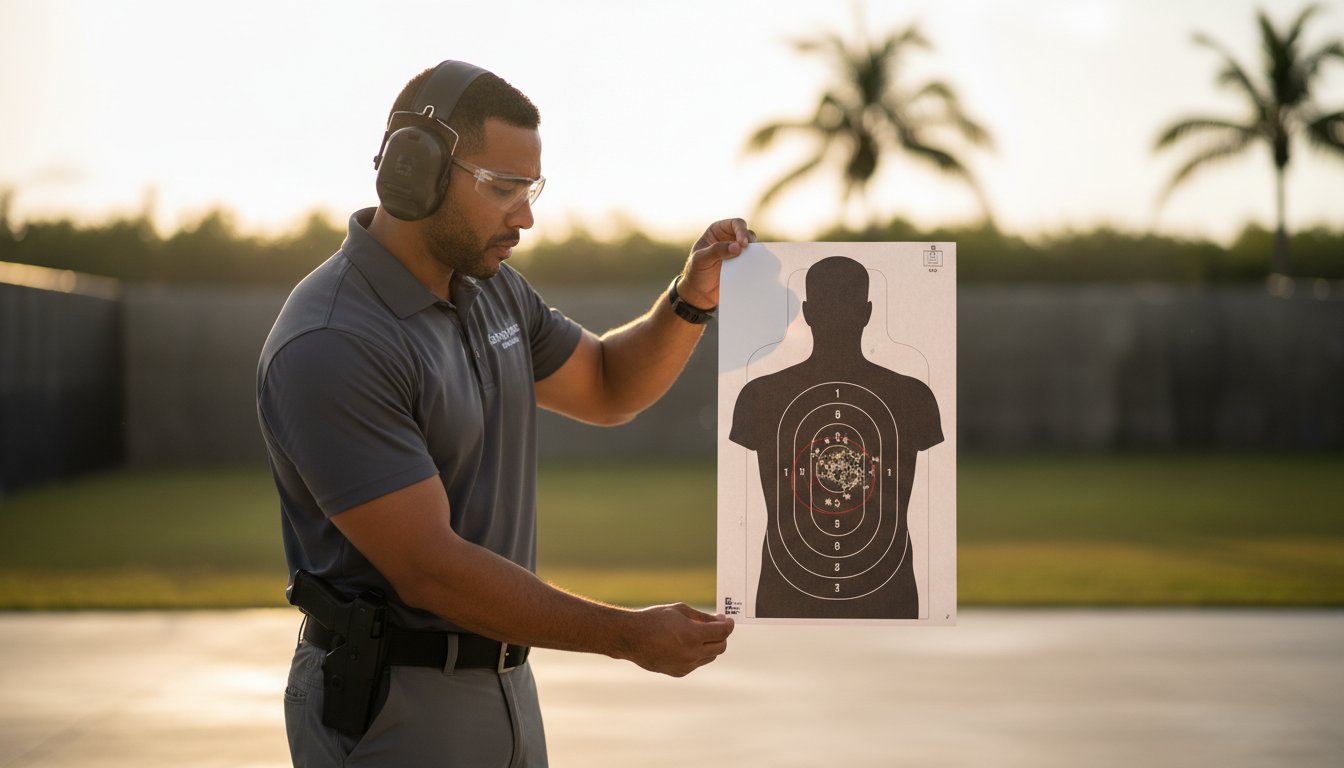
What if your paper targets could withstand the rigors of high-volume fire while enhancing your students' marksmanship skills? Many instructors face the frustration of flimsy paper that tears easily, failing to provide the realistic scenarios necessary for effective training. You deserve better. In this guide, you'll master the art of tactical training with high-precision paper targets engineered specifically for professional instructors and serious shooters. We promise to equip you with insights on selecting high-durability targets that not only survive the toughest conditions but also engage your students like never before. Get ready to elevate your training game and fortify your brand with targets that reflect the professionalism your range demands.
Key Takeaways
- Discover how high-fidelity paper targets serve as essential diagnostic tools, providing superior feedback on your shooting fundamentals.
- Learn to decode target codes like B-21 and B-27 to tailor your training for specific law enforcement and military qualifications.
- Understand the psychological benefits of training with realistic anatomical targets to enhance your marksmanship proficiency.
- Explore how custom paper targets can elevate your professional credibility as an instructor, making your training methodology stand out.
- Experience the Axle Targets advantage with American-made precision, designed for the warrior-engineer mindset.
The Role of Paper Targets in Tactical Marksmanship
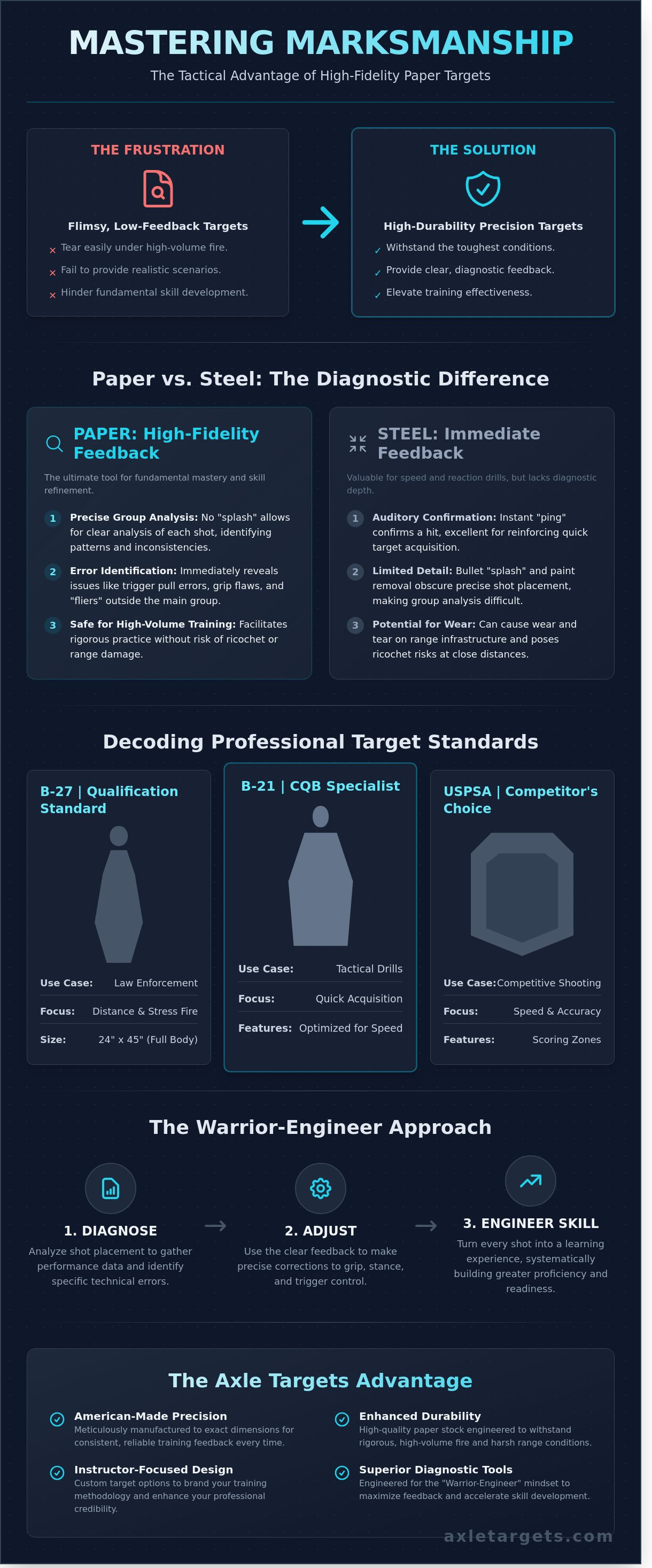
Paper targets serve as essential high-fidelity diagnostic tools for shooters. Unlike steel targets, they provide immediate and visual feedback that is crucial for mastering the fundamentals of marksmanship. The ability to analyze each shot on paper allows shooters to identify specific technical errors, making it easier to refine their skills and enhance performance.
Why Paper Beats Steel for Fundamental Mastery
Steel targets have their advantages, but they fall short in delivering the detailed feedback that paper provides. The absence of "splash" on paper allows for precise group analysis. Shooters can clearly see where each round struck, making it easier to pinpoint issues like trigger pull inconsistencies or grip errors. Paper also reveals "fliers," or shots that land outside the expected grouping, which can indicate problems in technique that need addressing. For a tactical comparison between steel and paper targets, check out this resource.
The Diagnostic Power of the Paper Target
Analyzing shot placement on paper provides key data points for correcting grip and stance. Each hole tells a story; it reveals whether the shooter is pulling shots left or right, or if their stance is compromising stability. Furthermore, paper facilitates high-volume training without causing damage to the range, allowing for a rigorous practice session without the risk of wear and tear that can accompany steel targets. For those looking to build a solid foundation in target shooting, mastering target shooting is an invaluable guide.
Embracing a "Warrior-Engineer" approach to range time means treating every session as an opportunity to engineer one's skills. This method emphasizes the importance of diagnostics and adjustments, turning each shot into a learning experience. By leveraging the feedback from paper targets, shooters can engage in a targeted practice regimen that leads to greater proficiency and tactical readiness.
Decoding Professional Standards: B-21, B-27, and Qualification Targets
In the high-stakes domains of law enforcement and military training, understanding target standards is crucial. The B-21 and B-27 targets represent industry benchmarks, each designed with specific tactical training purposes. Recognizing their differences enhances training outcomes and ensures proficiency in real-world scenarios.
The Silhouette Standard: B-27 and B-21
The B-27 target is primarily used for law enforcement qualifications. Its silhouette design features a full-body representation, allowing shooters to practice engaging a potential threat in various scenarios. The target measures 24 inches wide and 45 inches tall, providing a realistic profile for distance shooting. The design includes scoring rings, which help assess accuracy under stressful conditions.
In contrast, the B-21 target is optimized for close-quarters engagement drills. It emphasizes quick target acquisition and precision shooting, making it ideal for tactical training sessions where split-second decisions matter. The B-21’s size and layout facilitate training that mimics real-life confrontations. For deeper insights into agency standards and target applications, refer to law enforcement targets.
Competition and Precision: USPSA and SIG SAUER Designs
USPSA targets stand out in competitive shooting with their unique scoring zones. These targets are designed to test a shooter’s speed and accuracy under timed conditions, featuring smaller, more challenging zones that demand precision. The scoring system incentivizes shooters to balance speed with accuracy, elevating their skill set.
SIG SAUER targets, including those used in Modern Samurai training, emphasize precision and consistency. These targets are meticulously manufactured to exact dimensions, ensuring that every training session translates directly to real-world performance. This level of quality is non-negotiable in professional training environments, where even minor discrepancies can impact results.
The evolution of the FBI QIT-99 and other qualification standards reflects the growing demand for effective training tools. These standards have shifted over the years to incorporate lessons learned from tactical engagements, focusing on both marksmanship and decision-making skills. Agencies are now turning to professional-grade paper targets that can withstand repeated use while offering clear feedback on performance.
Investing in high-quality paper targets is essential for agencies committed to excellence. Professional-grade targets provide durability and clarity, ensuring that each training session is effective. For professionals who are serious about their training, having the right tools is paramount. Consider exploring Axle Targets for top-tier solutions that meet rigorous standards.
Anatomical vs. Situational: Engineering Real-World Proficiency
In tactical training, the choice of targets can significantly affect proficiency. Traditional silhouette paper targets serve their purpose but often lack the realism needed for high-stakes scenarios. In contrast, high-fidelity anatomical targets provide a detailed representation of human anatomy. This precision not only enhances shooting accuracy but also instills a deeper understanding of vital zones.
The psychological benefits of training with realistic human skeletons are substantial. Engaging with these targets fosters a sense of urgency and realism. Shooters develop an instinctive awareness of "stopping power" zones, focusing on mission-critical organ areas rather than merely aiming for center mass. This shift in perspective elevates tactical training to an advanced level, honing skills that could be vital in real-world situations.
The Science of Anatomical Shot Placement
Anatomical shooting targets are engineered to teach effective shot placement in critical areas. Unlike generic silhouettes, these targets highlight specific zones where a shot may incapacitate an adversary swiftly. The transition from center-mass shooting to targeting mission-critical organs enhances a shooter's effectiveness. Understanding the anatomy of a human body allows for calculated engagement, increasing the likelihood of achieving desired outcomes in tactical scenarios. For detailed insights on this approach, check out anatomical shooting targets.
Situational Awareness and Decision Targets
Training with situational "no-shoot" targets introduces an essential layer of complexity. These targets compel shooters to process decisions rapidly, simulating high-pressure situations where every second counts. By incorporating hostage scenarios and no-shoot targets, trainers can prevent "range-induced" complacency, pushing participants to engage their cognitive faculties actively. This method aligns with modern instructor-led designs, such as those developed by SAGE Dynamics, which prioritize situational awareness in tactical drills.
Effective training involves more than just hitting paper targets; it requires honing instincts and decision-making under pressure. The combination of anatomical shot placement and situational decision-making drills positions anatomical targets as the pinnacle of tactical training. Only through rigorous practice with these advanced tools can warriors develop the proficiency needed to face real-world challenges head-on.
Custom Targets for Instructors: Branding Your Training Methodology
Custom paper targets are more than just a tool; they are a powerful branding opportunity for firearms instructors. By adding logos and custom colors to targets, instructors can enhance their business value and create a unique identity in a competitive market. This not only elevates the perceived professionalism of their training methodology but also fosters a stronger connection with students.
Building Authority Through Professional Branding
Instructors using custom targets are often perceived as more elite by their students. The use of personalized designs signals a commitment to professionalism and quality. A cohesive range brand identity can have a profound psychological impact, instilling confidence in students who recognize that attention to detail reflects a high level of training quality.
- Increased student trust and loyalty.
- Enhanced visibility on social media platforms.
- Greater differentiation from competitors.
For design tips, refer to custom shooting targets with logo. Incorporating distinctive elements into your target designs can help establish your brand as a leader in tactical training.
Custom Drills and Proprietary Training Materials
Transforming standard paper targets into a unique training system can significantly enhance the effectiveness of your instruction. By integrating proprietary drills into your custom layouts, you create a tailored experience that aligns with your training philosophy. This not only improves learning outcomes but also reinforces your brand identity.
- Custom targets can be designed to support specific training objectives.
- Logistics for bulk ordering custom designs can streamline operations for large-scale ranges.
- Fast turnaround times are crucial; instructors can't afford delays in training materials.
Speed is essential. Instructors require quick access to custom targets to adapt to changing training needs. The ability to order in bulk and receive products promptly can be a game-changer in operational efficiency.
Investing in custom paper targets is more than just a tactical choice; it’s a strategic business move. By branding your targets, you enhance your professional credibility and expand your marketing reach. Students not only remember the drills but also the instructor behind them, amplifying your presence on social media and building a community around your training methodologies. Take the first step in elevating your brand with Axle Targets.
The Axle Targets Advantage: American-Made Precision
At Axle Targets, our commitment to premium materials and American manufacturing sets us apart in the tactical training industry. Each of our paper targets is meticulously crafted to ensure they withstand rigorous use while providing clear, immediate feedback. This unwavering dedication to quality resonates with the "Warrior-Engineer" mindset, where precision and reliability are non-negotiable.
Our extensive product line covers everything from USPSA-style targets to situational training options. This breadth allows tactical instructors and range owners to select the perfect target for their specific training objectives. With Axle Targets, you’re not just upgrading your inventory; you’re enhancing your entire training program.
Uncompromising Quality and Fast Turnaround
High-quality paper makes a significant difference in target longevity and visual clarity. The durability of our targets ensures they can handle the stresses of repeated use, while the sharp, clear graphics help shooters identify their performance accurately. Our production facility in Fort Lauderdale guarantees fast national delivery, ensuring you have the targets you need when you need them. We take pride in our elite support for the shooting community, providing not just products but also a partnership dedicated to your success.
Engineering Your Next Range Session
For range owners and professional instructors, transitioning from generic paper targets to Axle’s precision lineup is a strategic move. Our targets are engineered for excellence, designed to meet the demands of high-stakes training environments. Elevate the quality of your sessions and the performance of your shooters with our advanced designs.
Ready to take your range inventory to the next level? Engage with excellence—shop Axle Targets today.
Elevate Your Tactical Training
Mastering tactical proficiency requires precision and adaptability, and paper targets are essential tools in your arsenal. They provide immediate feedback, helping you discern your strengths and weaknesses on the range. Understanding professional standards like B-21 and B-27 ensures you're training with the same benchmarks used by LEO and military professionals. Custom targets can further enhance your training methods, allowing you to brand your unique approach and elevate your instruction.
Don't settle for anything less than the best. Experience the Axle Targets advantage—American-made quality, engineered for excellence. Upgrade your training now and shop our premium paper targets at Axle Targets. Equip yourself with the tools that elite professionals trust. Your journey towards tactical mastery starts today.
Frequently Asked Questions
Why should I use paper targets instead of steel for training?
Paper targets are ideal for training because they provide instant visual feedback. Unlike steel targets, which can be expensive and require maintenance, paper targets are cost-effective and disposable. They allow shooters to analyze their grouping, making them essential for honing precision and accuracy in a controlled environment.
What is the difference between a B-21 and a B-27 target?
The B-21 target is designed for individual qualification, featuring a silhouette of a human figure with specific scoring zones. In contrast, the B-27 target is larger and focuses on more comprehensive engagement, often used in law enforcement training. Understanding these differences helps ensure that training aligns with specific tactical goals.
Can I customize paper targets with my own shooting range logo?
Yes, you can customize paper targets with your own shooting range logo. Many manufacturers offer this service, allowing you to brand your targets for training purposes or competitions. This personalization can enhance the identity of your range and provide a professional touch to your training materials.
What are anatomical shooting targets and why are they used?
Anatomical shooting targets are designed to represent specific human anatomy, highlighting vital areas for accurate shot placement. They are used in tactical training to help shooters focus on critical zones, improving their ability to engage effectively under high-pressure scenarios. This precision training is crucial for law enforcement and military applications.
How many paper targets come in a standard bulk pack?
A standard bulk pack of paper targets typically contains 100 to 500 units, depending on the manufacturer. This bulk purchasing option is designed for high-volume training, ensuring shooters have sufficient targets for extended practice sessions without frequent reordering.
What type of paper is best for high-volume shooting practice?
For high-volume shooting practice, using heavy-duty, bright-white paper is recommended. This type of paper withstands repeated shots and provides clear visibility for marking impacts. Many professional shooters prefer paper with a weight of 80 lbs or higher, ensuring durability during intense training sessions.
Are there specific targets for FBI or LEO qualification?
Yes, there are specific targets designed for FBI and Law Enforcement Officer (LEO) qualification. These targets meet standardized dimensions and scoring zones set forth by federal and state agencies, ensuring that training aligns with real-world requirements. Using these official targets prepares shooters for the qualifications they will encounter in the field.
How do situational targets improve decision-making under stress?
Situational targets simulate real-life scenarios, forcing shooters to make quick decisions under pressure. By varying the target's appearance or placement, these training aids challenge shooters to assess threats accurately and respond appropriately. This training enhances cognitive function and decision-making skills, crucial for success in high-stress environments.